Charlie Kahn·Founder·October 2026
Small goes big
Thoughts on taking software to market.
I spent the last seven years figuring out how to take products to market. My last company built global launch platforms for brands like BMW, TORK and Marmot, and more than a few startups. Much of that work was in categories that did not exist yet, things like AR sunglasses and neurostim headsets, where nobody could tell you who the buyer was or what they wanted.
We worked alongside some incredible marketing and sales minds. Some of what we launched went up in smoke or imploded, and some just flatlined. GTM is very hard. Differentiation takes an innate understanding of the market; you can’t fake that. And timing is half the battle. We shipped a lot of stuff that worked too, and not always for the reasons we planned.
The things that worked had three common themes, and I’m bringing them into everything we’re up to at Brio.
- Start small to go big.
- Go where everyone isn’t.
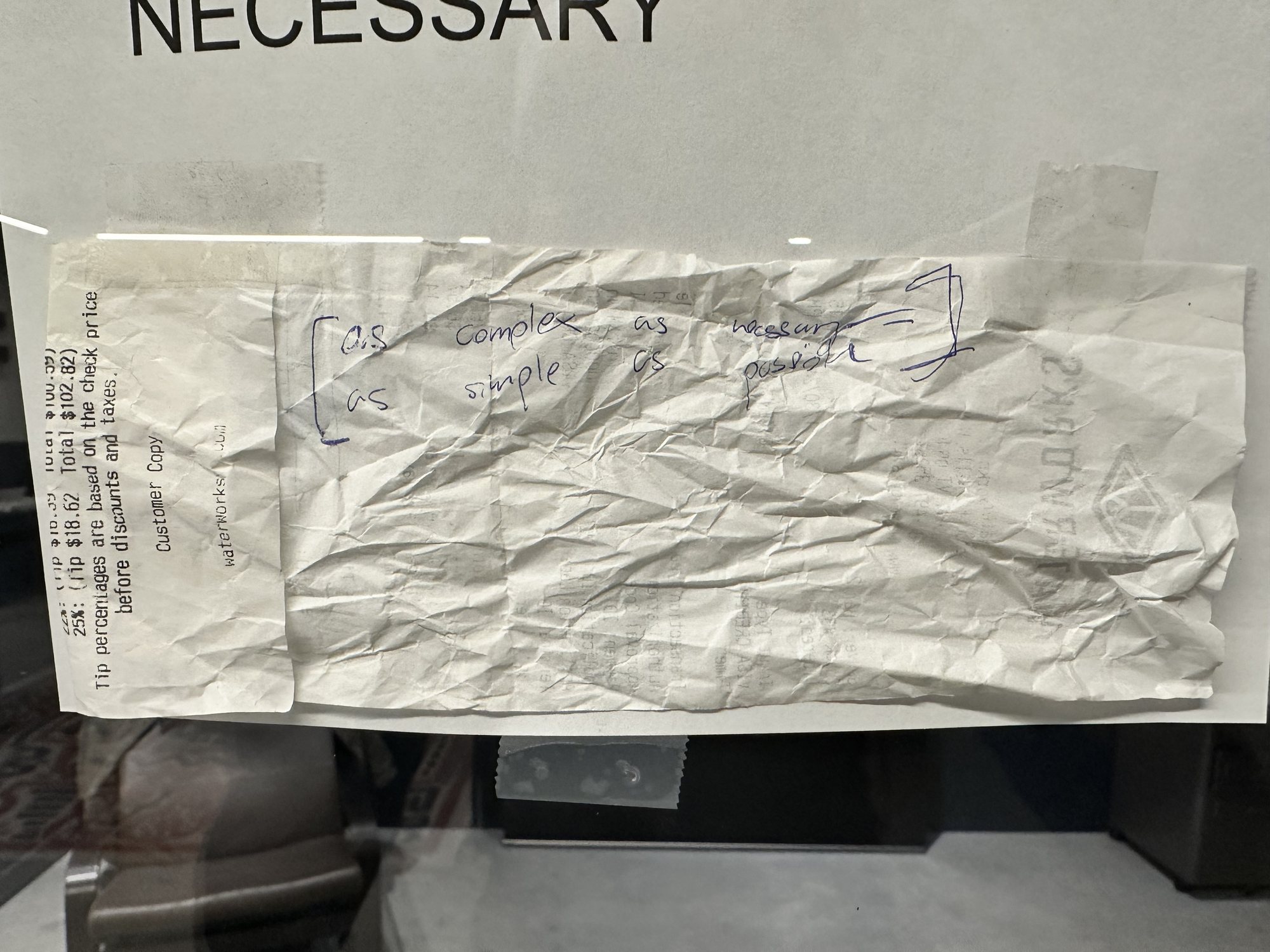
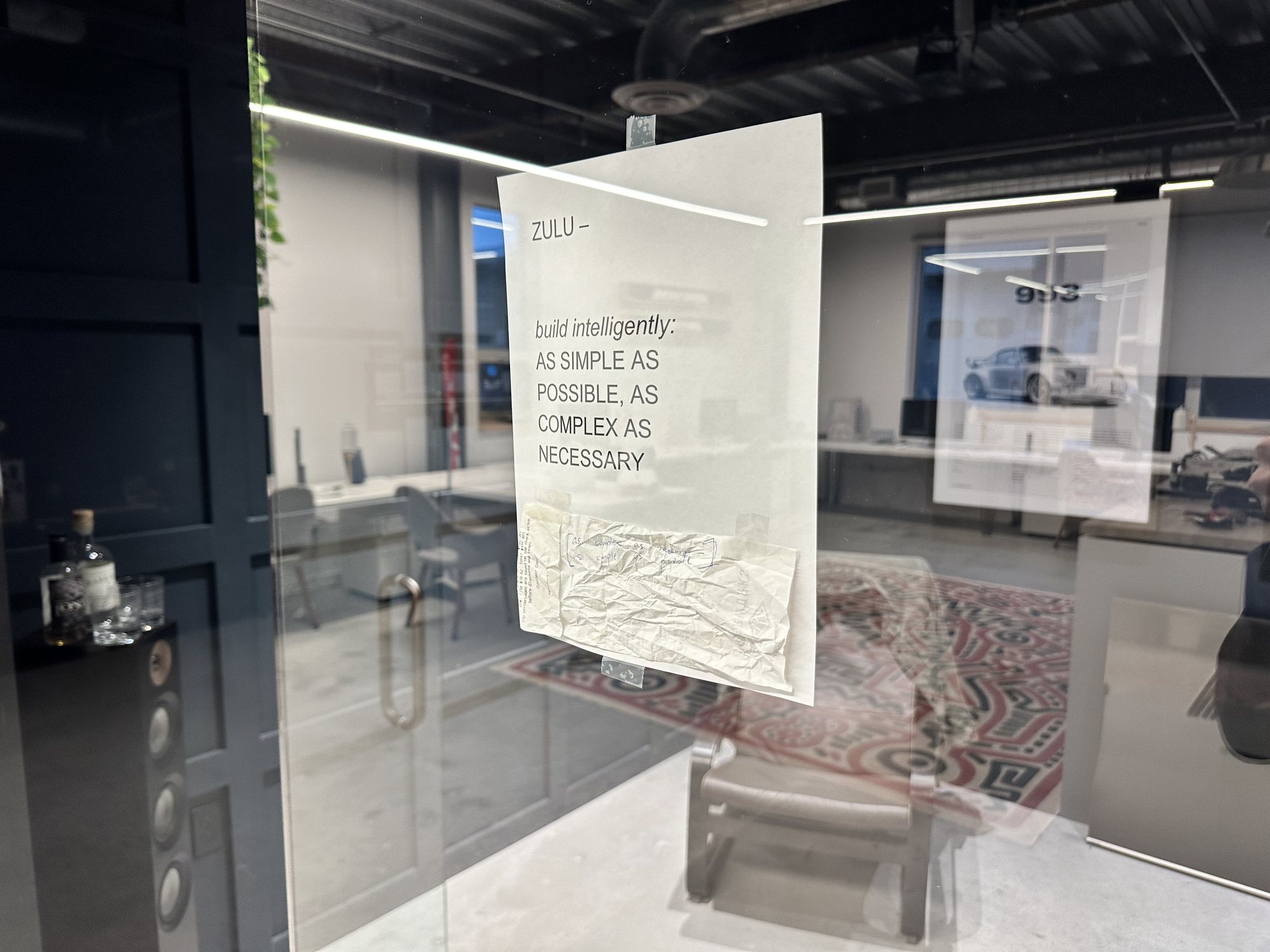
- As simple as possible, as complex as necessary.
The third one is scribbled on the back of a receipt that still hangs in my office.
What is Brio?
People ask what I mean when I say better, faster, smarter. I mean a new kind of B2B software that does work for you.
Brio knows every door, every SKU, and every buyer’s history. It writes the order, fixes the catalog before anyone notices, and answers in seconds what used to take a report.
You direct. Brio works.
Brio’s small is the outdoor wholesale market.
Brio’s big is the $1T of US catalog wholesale that has the same shape.
Where and why
Why outdoor?
This market is at a tipping point. ERPs are finally in the cloud, and buyers are for the first time willing to transact digitally. The cost of staying still has finally outstripped the cost of changing.
- Nearly 80% of ERP deployments now run in the cloud. (Panorama)
- 73% of B2B buyers are now comfortable placing an order over $50,000 online, up from 59% four years ago. (McKinsey)
- 61% of B2B buyers prefer to buy without a rep, but 82% of wholesale transactions are offline. (Gartner)
- 62% of ERP application spending will be on AI-embedded solutions by 2027, up from 14% in 2024. (Gartner)
- 5 incumbent platforms own nearly 100% market share (apparel/hardgoods). None have announced plans to incorporate AI.
This forcing function is most obvious in specialty retail, where the reps I’m talking to every day say they’re spending more time than ever reviewing retailer orders and less time building them.
Do not sell software
What Davis and I learned from talking to over fifty sales directors in 2026: selling them software isn’t going to work. At least not in a venture scale curve kind of way. Sales directors hate BDRs, and this is our opportunity.
Go where everyone isn’t.
Brio is never going to sell you software. We’re going to sell your time. Back to you. And the people selling it will be the people already in your company.
Logos on trucks
When Brio wins, it will be because the brands on Brio make more money than the brands on Elastic Suite.
This is how we get there:
- Not like a software company. Like an action sports company. You will meet Brio at the places you already go, through people you already trust.
- Athletes, events, trade shows. Brio is for the brands out front. I want to see Brio on your race trucks, your team jackets, and your athletes.
- Here to make friends: Every rep, buyer and customer is our salesperson. We’re creating an army of 1,000 reps to sell Brio. Our salespeople are already in the room. (It’s worth noting that I think Brio is the first B2B company who can do that. I haven’t found an example that equally aligns the incentives across buyer, supplier and rep to want to use it. We actually have over 1k reps on our list to begin selling when Brio goes live.)
- Can software be cool? Can a cooler be cool? Yeti. Moving on.
Get to market. Stay there? How?
This is the great problem to have. And it is solved by the genuinely fantastic product. I think the great products eventually win. In a few very rare cases (Segway, Google Wave) really great products failed because someone bungled the GTM. Mostly though, it’s the other way around. We launched a lot of really cool stuff at Zulu and once the products got out into the market it turned out they didn’t really work.
The first rule of building a genuinely fantastic product is that the people building it need to be the people who will use it. This is the universal law of design. It’s why our first hire was a sales rep.
I think the genuinely fantastic B2B OS looks like this:
- Order time cut by 90%.
- Catalog errors cease to exist.
- Reps spend <5% of their time on Brio.
- A buyer set up with one brand orders from the next with no setup.
- You get paid now and your buyer keeps net terms. Brio makes money when you make money.
Joining Brio is a growth play not a software play. The day you go live, your buyers are already there. Money moves automatic. And what you get today with Elastic Suite, NuOrder, SuiteCommerce, and RepSpark comes standard with no extra fees.
Oh sh** tools
Coined by someone at Zulu. An oh shit tool is the one where someone says “oh shit” out loud when you find out your biggest competitor just got it. In 2014 a D2C storefront that used Shopify could outperform a 1:1 competitor in the same space simply because they had Shopify. It let them move faster. That is Brio.
Other examples include the computer in 70s banking, the pistol in Halo Combat Evolved and the blown diffuser on Red Bull’s 2011 F1 car. You just cannot compete with these things and it becomes an adapt or die format very fast.
So we’re going to stay in market and win in market because the brands that don’t adopt Brio are going to lose to the ones that do. Brio makes your most frustrating, time consuming and expensive workflows disappear. Going back to manual work is painful and expensive, and why would you? Do you want to go back to dial up internet?
2030
I want all of catalog wholesale transacting on Brio. When everyone is buying in the same place, everyone wins. A buyer who is set up with one brand can order from the next one with no setup, so each brand that joins makes Brio more useful to the brands already there.
A single, standardized checkout connects everyone. Not using Brio is like taking orders by fax in 2026. I know some of you are still doing that. Davis can help you fix that!
No expedition here. If we do 20% of this we’ll have won.
Charlie
Want to see Brio?
Enter your email and I’ll show you.